

Everything relevant to bilateral relations: a look back at the past two weeks and a look ahead at the next two weeks
Every other Thursday, The Bilateral Briefing provides its paying subscribers with a summary of all the events that matter for German-Israeli relations. Each item comes with links to original sources and further media coverage. Subscribe now to stay fully informed about the bilateral relationship.
Looking back at the two weeks from November 6 to 18, this update covers, besides Angela Merkel’s commitment to Israel on the podcast “Kaffee und Fluchen,” Israeli defense companies in Germany, the debate surrounding Claudia Roth, Chancellor Merz’s remarks on antisemitism among immigrants, and Baden-Württemberg’s cooperation with Israel on drone defense.
Looking ahead to the period until December 3, we highlight, among other things, the vote on expelling Vanessa Emde from the Left Party’s parliamentary group in Berlin, budget week in the Bundestag, and the appearance of former Mossad chief David Barnea in the Bundestag.
Looking Back
Merkel: Israel’s Right to Exist Is “Practically” Under Threat
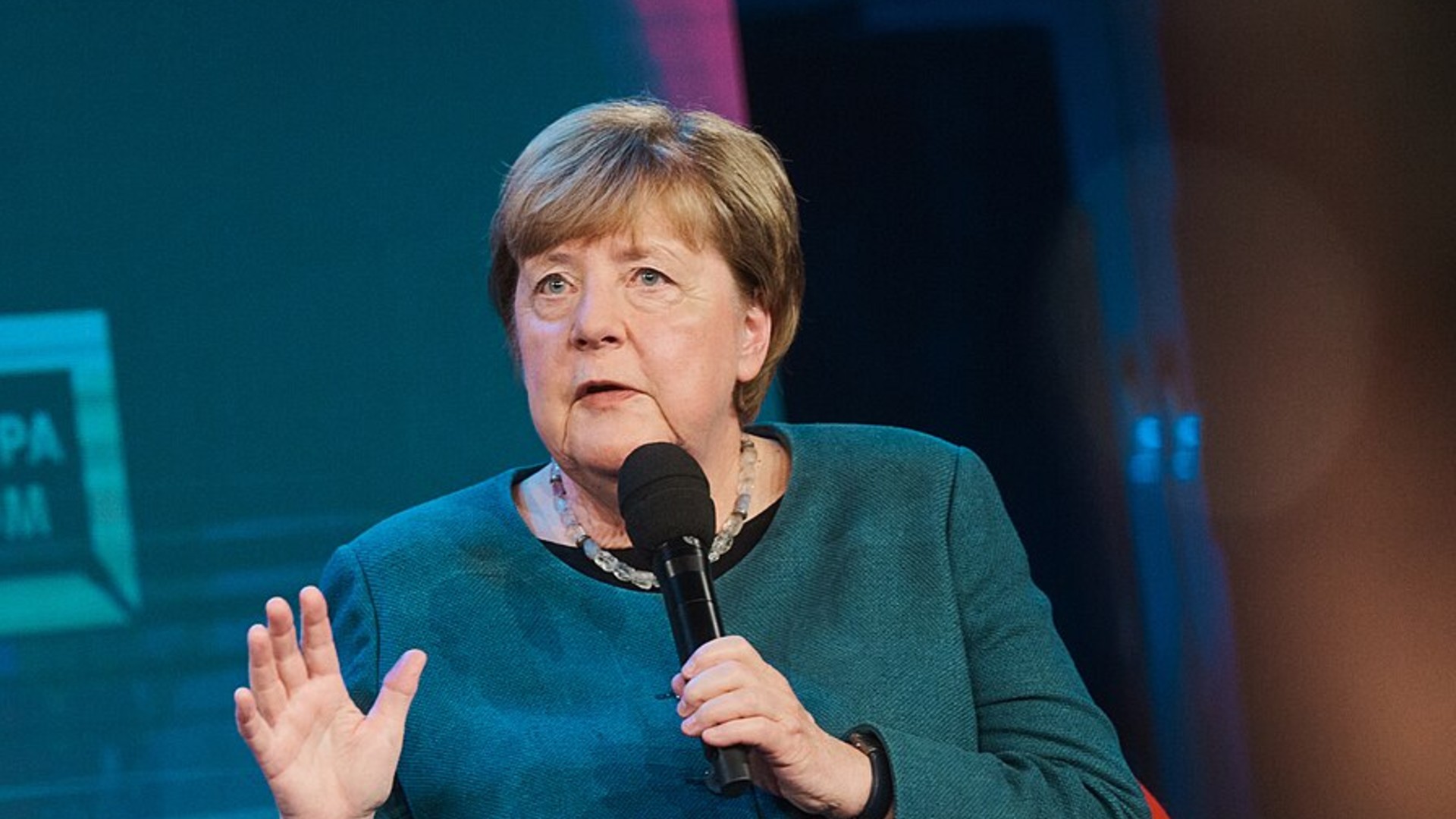
Former Chancellor Angela Merkel (CDU) has reaffirmed her statement that Israel’s right to exist is part of Germany’s Staatsräson, its reason of state. On the podcast “Kaffee und Fluchen” (“Coffee and Cursing”), produced by the student forum Studopolis and released on Friday, November 13, she said the statement was sometimes misunderstood as meaning that one may not criticize the Netanyahu government. “I have done that many times,” Merkel said. Criticism was “not forbidden at all,” but one had to keep in mind how the State of Israel could continue to exist and, ideally, live in peace. Israel’s right to exist, she said, was threatened by Iran and Hamas “not theoretically—it is a practical threat.”
On the war in Gaza, Merkel said October 7 had been “not an attack by Israel on the Gaza Strip, but an attack by Hamas on Israel.” She asked listeners to put themselves in the position of an Israeli prime minister when Hamas bunkers lie beneath kindergartens and hospitals. At the same time, she said, disproportionality had to be called out “in some places,” particularly regarding the supply of food. She considers the attention paid to Israel disproportionate compared with crises such as those in Yemen or Sudan.
On domestic politics, Merkel defended the CDU’s incompatibility resolution, which rules out cooperation with the Left Party. Anyone who takes the reason-of-state statement seriously would find some one-sided declarations incomprehensible—“and the Left Party in Berlin in particular has a problem there.” Asked about the coalition talks between the SPD, the Greens, and the Left Party in Berlin, she said: “I wouldn’t do it.” She was surprised that the Greens and the SPD had not even sought talks with the CDU (Berliner Morgenpost/KNA). Whether the coalition materializes currently hinges on how the parties deal with the anti-Israel Left Party legislator Vanessa Emde.
In Israel, the interview was widely covered, including by Ynet, Maariv, the Jerusalem Post, and the Times of Israel. Even the terrorist organization Hamas responded: according to JNS, its spokesman Hazem Qassem accused Merkel of “actual complicity in genocidal crimes.”
Read more
Israeli Defense Industry in Germany: Elbit Cancels Plant, Arrow 4 Is Coming
The Israeli defense company Elbit Systems will not build a plant in Sangerhausen in the state of Saxony-Anhalt. The site was “not an option” and did “not meet the necessary requirements,” the company told the Mitteldeutsche Zeitung on Thursday, November 12 (MDR). For months, Elbit had negotiated with the town over a site of around 140 hectares along the A38 highway; some 400 jobs had been under discussion. There had been protests against the plans; according to MDR, they had nothing to do with the cancellation.
Elbit is nevertheless sticking to its expansion course in Germany. In September, Elbit’s Germany head Marian Rachow announced plans to grow the workforce to well over 1,000 employees within three years (