

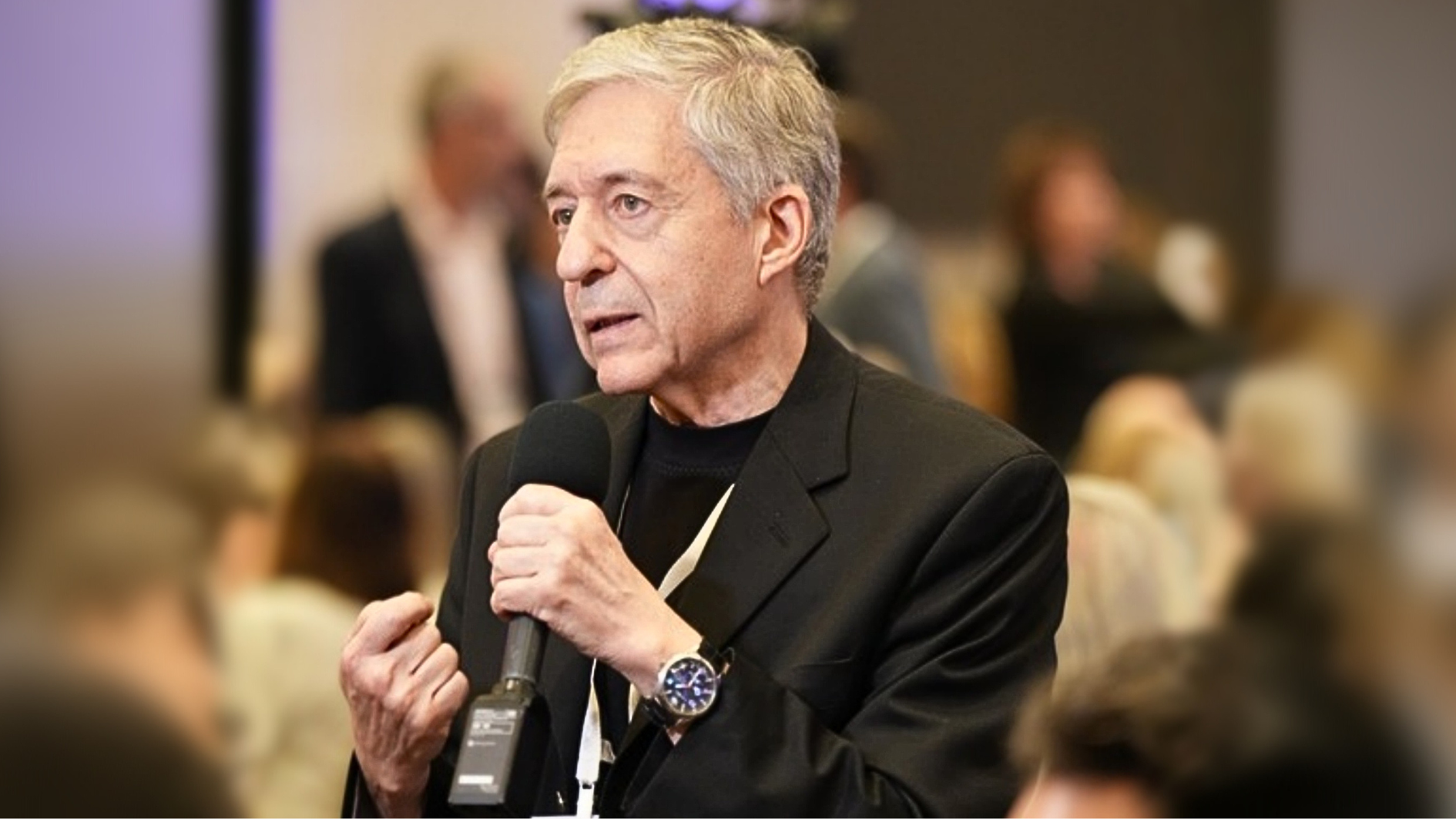
What can Germany do for the Middle East peace process? A lot, believes Yossi Beilin. In an interview, Israel’s former deputy foreign minister talks about the two-state solution, an episode involving Joschka Fischer and his expectations of the German government.
Interview by Joshua Schultheis
Yossi Beilin is regarded as the architect of the Oslo Accords between Israel and the “Palestine Liberation Organization” (PLO). As deputy foreign minister in Yitzhak Rabin’s cabinet, Beilin laid the groundwork in the early 1990s for direct talks between the two sides, which ultimately led to mutual recognition and the establishment of the Palestinian Authority.
But since Rabin’s assassination in 1995 and the outbreak of the Second Intifada in 2000, a resolution of the Israeli-Palestinian conflict has moved ever further out of reach, and the Hamas attack of October 7, 2023, has further discredited the idea of a Palestinian state in the eyes of most Israeli politicians. According to a recent “Gallup” poll, only 26 percent of Israelis support the two-state solution.
Yet even after leaving active politics, Beilin remains a passionate advocate of the two-state solution – and sees an important role for Germany. Under Foreign Minister Joschka Fischer, the German government once before acted as a mediator between Israelis and Palestinians, he told The Bilateral Briefing. “He should serve as a model for Germany today,” Beilin says. “We need that kind of commitment again.”
Mr. Beilin, Gadi Eisenkot, Prime Minister Benjamin Netanyahu’s main challenger, recently said that believing in a two-state solution after October 7, 2023, is “simply delusional.” Who in Israeli politics still supports a Palestinian state?
Yossi Beilin: I belong to the Democrats, led by Yair Golan, and we still support the two-state solution. I believe Eisenkot also understands that there is no other way to resolve the conflict. I think he made a mistake by listening to advisers who told him that talking about the two-state solution would hurt him at the polls. People know he supports it anyway. Even Netanyahu accepted the two-state solution when he backed Trump’s 20-point plan for Gaza, which outlines a path toward a Palestinian state. One can argue that it can’t happen right away, although I believe we can and should do it tomorrow. But calling the two-state solution “delusional” means telling your own supporters something they can’t accept. They know it isn’t what Eisenkot really thinks.
If Eisenkot becomes prime minister after the October 27 elections, how do you see the path toward a two-state solution?
The whole world supports the two-state solution. Eisenkot is a pragmatist, and he has no alternative to offer. He won’t come and say, “The two-state solution is dead. I have something else for you.” So it remains the only solution on the agenda. What will happen? I expect Trump and Eisenkot to develop a very good relationship and to put the two-state solution back on the agenda. Eventually, Eisenkot will begin talking to Abu Mazen [Mahmoud Abbas, head of the Palestinian Authority]. I think that is realistic. He may avoid the words “Palestinian state” and speak instead of continuing talks toward a political or diplomatic solution. But that will be a matter of rhetoric, not substance: everybody will know that the only solution on the table is the two-state solution.
In your view, what role should Germany play in the peace process going forward?
Germany can do a lot for the peace process. It is very cautious because of what happened eighty years ago, and I respect that. Germany understands that the two-state solution is the only way for Israel to remain both a democratic and a Jewish state. People like me can’t demand that Germany change its very partisan policy. What I would like to see is far greater involvement in the process, for example by hosting informal meetings between Palestinians and Israelis.
“It would send a strong signal if the German chancellor came to Israel after the elections and asked the new prime minister about the two-state solution.” – Yossi Beilin
In Germany?
Yes, in Germany. It has been done before! Joschka Fischer hosted such meetings when he was foreign minister. He should serve as a model for Germany today, because he was deeply involved in the Middle East peace process. During a crisis with Arafat, he came to Israel and shuttled between Ramallah and Jerusalem to broker a deal. At the time, Ariel Sharon was Israel’s prime minister and Yasser Arafat was president of the PA. No one held his involvement against him. He wasn’t siding with the Palestinians against Israel, or the other way around. He was there to help both sides. Back then, German diplomacy was very knowledgeable. They knew what was needed, but acted cautiously. We need that kind of commitment again today. The current German government should adapt its self-imposed limits to the new situation. It could, for example, support my proposal for a “Holy Land Confederation.”
Together with the Palestinian attorney Hiba Husseini, you developed the idea of a “Holy Land Confederation.” Under this concept, Israel and Palestine would be two independent states within a confederation, each with its own parliament and government, while sharing institutions for common concerns such as environmental protection and infrastructure.
It would mean that no one has to leave their home, on either the Palestinian or the Israeli side, which is the biggest obstacle. If we can achieve something like that, it would truly pave the way for a Palestinian state. It would send a strong signal if the German chancellor came to Israel after the elections and asked the new prime minister about the two-state solution and the Confederation idea. If the Israelis reject it outright, Germany can’t support it. I understand that. But the German government should put it on the agenda and bring Israelis and Palestinians to the table to discuss it.
Read more
Do you see support for the Confederation idea on either the Israeli or the Palestinian side?
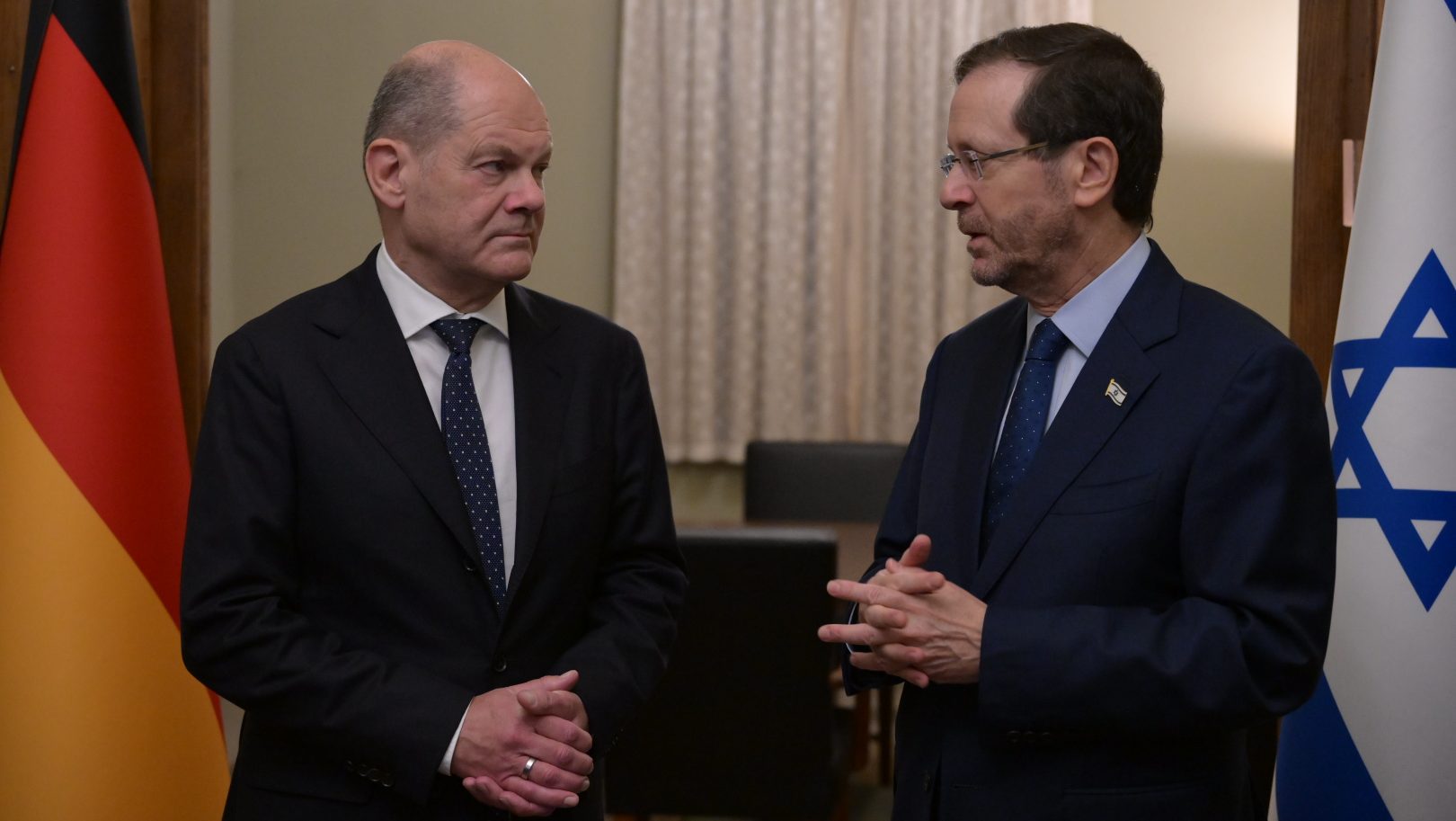
I met Abu Mazen two months ago, and we discussed it seriously. He didn’t say yes, but he asked me many questions. We spoke for almost an hour about this alone. I also met President Herzog. Like Abu Mazen, he didn’t endorse it, but he was open to discussing it.
Are Mahmoud Abbas and the PA still reliable partners for a two-state solution?
Without question! The two-state solution is his life’s work.
Many Israelis would probably disagree with you.
Why? Many Israelis believe the two-state solution is bad for Israel, but they don’t deny that Abu Mazen supports it.
Critics say Abbas has never stopped supporting terrorism against Israel.
When was the last time you saw him with a rifle?
That is certainly how many Israelis see him. But let’s return to Germany: So far, the German government has stalled European sanctions against Israel in Brussels. Should it change its position?
As I said, I respect their caution. I just want them to be much more involved in bringing the two sides together. I don’t expect Germany to take the lead in boycotting Israel, or even the settlements in the West Bank, and I respect that. I personally try not to buy products from the West Bank, but that is my own choice. I’m strongly opposed to BDS, because it is simply a boycott of Israel as a whole. I respect Germany for not supporting it – and even for openly opposing it.
“Recognizing a Palestinian state is an easy way out for many countries – it spares them from having to deal with the issue any further.” – Yossi Beilin
Where do you stand on recognizing a Palestinian state? Unlike most countries, Germany has not yet taken that step.
Let me answer with an anecdote. In 1998 or 1999, I discussed this with Yasser Arafat. He told me that more than 100 countries already recognized Palestine. “It is very good for me,” he said. “I’m very proud of it.” But he added: “Between us, it is also a problem for me, because once a state recognizes Palestine, it feels it has done everything needed to help the Palestinians. And nothing changes on the ground.” That was in the late 1990s, though. I’m not sure Abu Mazen sees it the same way today. He has been so frustrated by Israel’s refusal to talk to him that he has made the international arena his only arena. But I think recognizing a Palestinian state is an easy way out for many countries – it spares them from having to deal with the issue any further.
So you agree with the German position: Recognition of a Palestinian state comes at the end of the peace process, not at the beginning?
Yes, I think they are right.
In the past, Germany built up considerable soft power, not only in Israel but also among Palestinians, through its financial support for the PA and Palestinian civil society. Does Germany still enjoy good standing with both sides?
I know that no Israeli government has ever been as unpopular in Germany as the current one under Benjamin Netanyahu. Of course, the Germans distinguish between Israel and its government. But to the best of my knowledge, they regard this government as the worst they could imagine. Like many others around the world, they are waiting for a change. At the same time, Germany’s leaders have remained firmly committed to Israel all these years. Before every German election, people said this would be the last chancellor truly committed to Israel. Now there is a new generation with no personal memory of the past, they said. Yet every generation has understood this responsibility, and none has changed course – something we greatly appreciate.
And Germany’s standing with the Palestinians?
Germany supports the idea of a Palestinian state and helps the Palestinians in many areas. I think the Palestinians appreciate that.
So you believe Germany does have the capacity to play the role in the peace process that you envision?
You said it!