

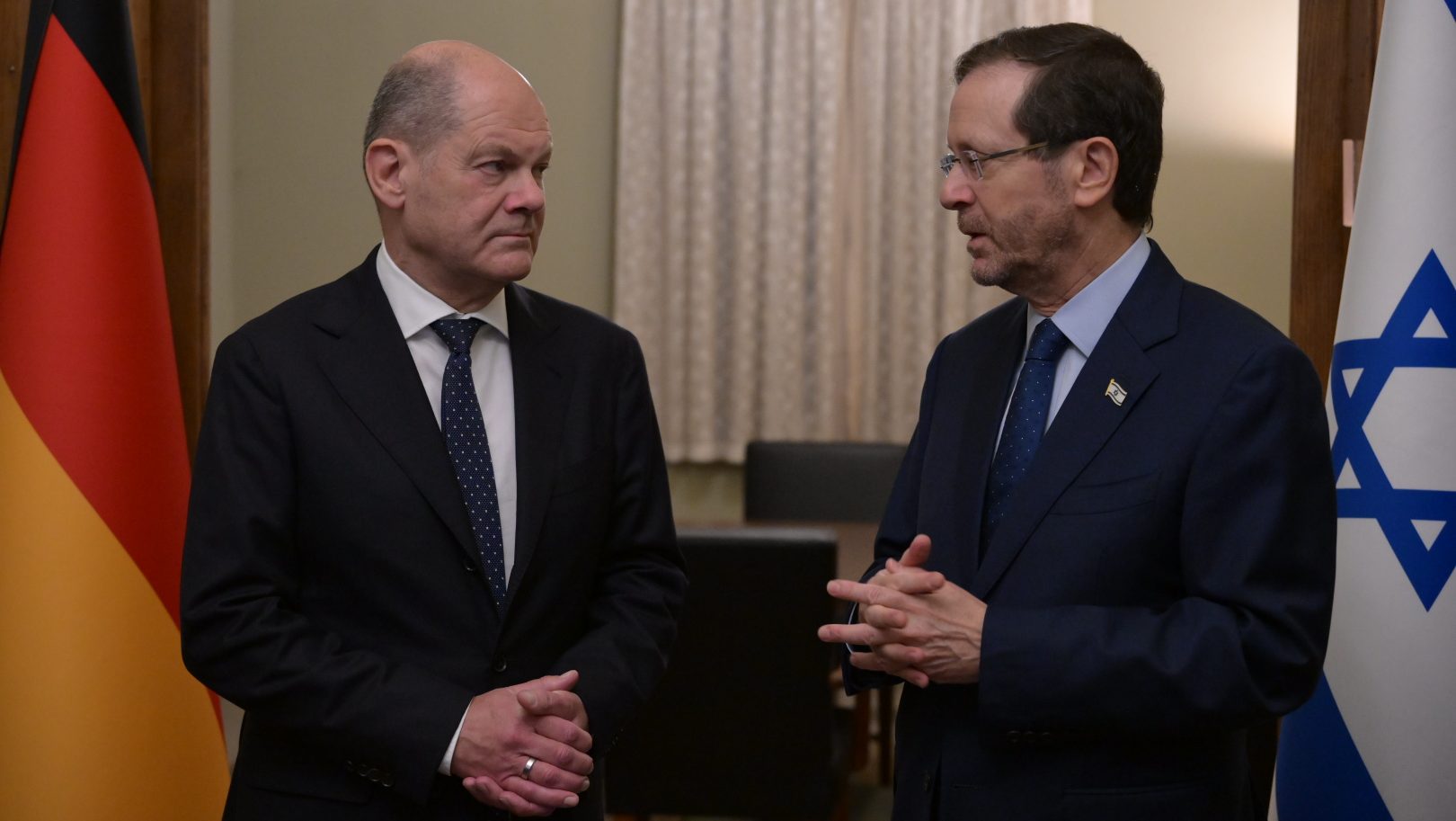
Judicial overhaul, Hamas attack, Gaza war, arms embargo: Rarely have German-Israeli relations been tested as severely as under Netanyahu’s sixth government. A chronological review.
When Benjamin Netanyahu had his sixth government sworn in at the end of December 2022, few could have foreseen the four years that lay ahead for German-Israeli relations. With ministers such as Itamar Ben-Gvir and Bezalel Smotrich, it was the most right-wing government in Israel’s history. What followed was the dispute over the judicial overhaul, the Hamas massacre of October 7, 2023, more than two years of war in Gaza, two wars against Iran, an arrest warrant from the International Criminal Court for Israel’s prime minister and a German halt on arms exports. Rarely since diplomatic relations were established in 1965 has the relationship been under such strain.
And yet relations have remained stable overall. In Israel, Germany is still regarded as the country’s most important ally in Europe – despite the sharp criticism Berlin has repeatedly leveled at Jerusalem. Unlike France, for example, whose President Emmanuel Macron was openly attacked by Netanyahu, Germany was almost always treated with restraint by Israeli politicians. Outbursts such as that of Ben-Gvir, who accused Germany in the summer of 2025 of returning “to supporting Nazism,” remained the exception and were promptly contained by Israel’s own Foreign Ministry.
Yet Germans increasingly do not share their government’s line, which is friendly toward Israel by European standards. Here the relationship is in genuine crisis: 73 percent of Germans now view Israel negatively, nine points more than in 2025 (Pew). As early as August 2025, 83 percent supported halting arms deliveries that could be used in Gaza, and 62 percent called for more political pressure on Israel (Politbarometer). The reverse does not hold: Israelis continue to view Germany positively. 43 percent call it a friend of their country, more than any other European country surveyed (Hebrew University barometer).
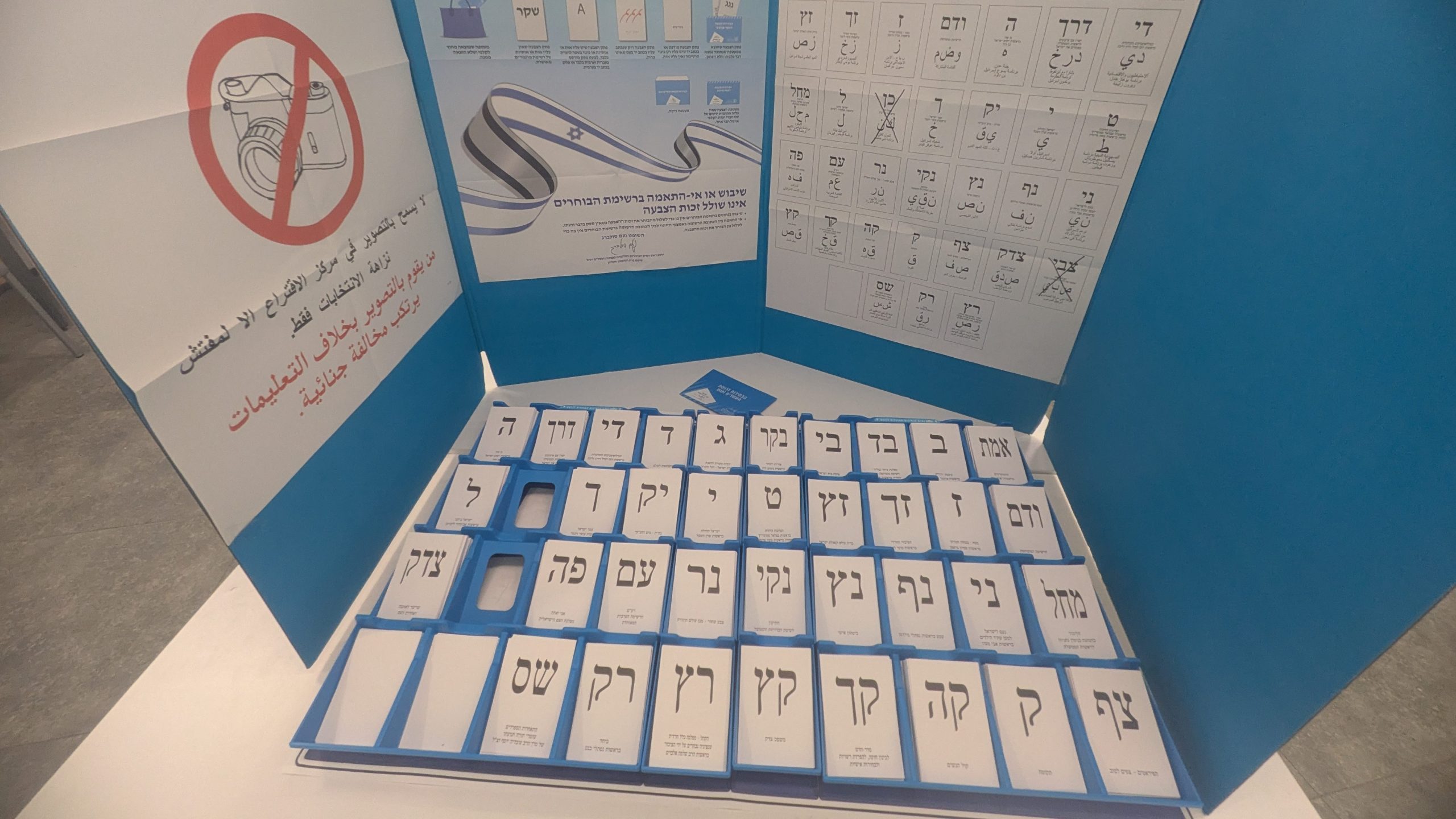
On Tuesday, October 27, Israel elected a new Knesset. This brings to an end the term of a government that, for all its crises, proved remarkably stable: It is the first government since 1973 to serve out its full term. Time to look back on four years of German-Israeli relations.
A Discordant Start
Chancellor Olaf Scholz (SPD) congratulated Netanyahu after the election of November 1, 2022. Both wanted to deepen the “particularly close relations” even further, according to the press release. But the judicial overhaul soon overshadowed the relationship. With it, the government sought to curb the powers of the Supreme Court and gain more influence over the appointment of judges. Hundreds of thousands of Israelis protested against it for months. When Netanyahu visited Berlin in March 2023, Scholz said Germany was following the debate “with great concern” (transcript). In September, Israel protested because Ambassador Steffen Seibert had attended a Supreme Court hearing on the reform. Berlin backed him, and at a meeting in New York, Scholz urged Netanyahu to seek “the broadest possible support in society” for such fundamental decisions (press release).
Arrow 3: A Deal of a New Magnitude
At the same time, the two countries agreed on the largest arms deal in Israel’s history. On September 28, 2023, Defense Minister Boris Pistorius (SPD) and his counterpart Yoav Gallant signed a letter of intent in Berlin for the purchase of the Arrow 3 missile defense system. The contract, worth around €3.6 billion, followed in November (Defense Ministry). Following an expansion at the end of 2025, the volume is set to rise to more than $6.5 billion (IAI). Observers spoke of a historic reversal: Now Israel is providing for Germany’s security, not the other way around. The system has been operational in Brandenburg since December 2025 (Defense Ministry).
October 7: “The Place at Israel’s Side”
After the Hamas massacre of October 7, 2023, in which the terrorist organization killed around 1,200 people and abducted 251 others as hostages, the German government stood unreservedly by Israel. “At this moment, there is only one place for Germany: the place at Israel’s side,” Scholz told the Bundestag on October 12 (government statement). Five days later, he became the first head of government to travel to Israel after the attack (statement). Foreign Minister Annalena Baerbock (Greens) had already flown there on October 13. Germany stands “firmly and unwaveringly at Israel’s side,” she said (Federal Foreign Office). Approvals for German arms exports to Israel rose sharply by the end of the year.
Read more
Growing Tensions and an Embargo That Wasn’t Supposed to Be One
As the war dragged on, criticism from Berlin grew. In January 2024, the German government did announce that it would intervene on Israel’s side in South Africa’s genocide case against Israel before the International Court of Justice (ICJ). But as early as her trip to Israel in February, Baerbock warned that an offensive on Rafah would cause the situation in Gaza to “tip over completely” (Federal Foreign Office). During his second trip to Israel in March, Scholz, too, urged caution with a view to the impending offensive on Rafah and called for more humanitarian aid (statement). That same month, Nicaragua sued Germany before the ICJ, accusing it of aiding and abetting genocide through its arms deliveries (ICJ).
From spring 2024, Berlin approved hardly any exports of weapons of war to Israel – by the end of May, they were worth a mere €32,000 or so (government response). The government denied that there was an arms embargo. In October, the CDU/CSU accused it in a Bundestag debate of blocking deliveries. Germany must “stand firmly at Israel’s side,” said Johann Wadephul (CDU) (Bundestag). Scholz gave assurances: “There are deliveries, and there will always be further deliveries” (Bundestag). When the International Criminal Court issued arrest warrants for Netanyahu and Gallant in November, the government announced it would “conscientiously examine” the “domestic steps” (statement). At the end of December, Baerbock lamented that the military operations in Gaza were claiming “far too many civilian lives” (Federal Foreign Office).
New Government, New Tones
The change of government in Berlin initially promised an even more pro-Israel stance compared with other EU states: The day after the federal election in February 2025, Friedrich Merz (CDU) said he wanted to find ways for Netanyahu to visit Germany without being arrested. But as early as May, the new chancellor said at the WDR Europe Forum that, “frankly,” he no longer understood “what goal” the Israeli army was pursuing in Gaza. Foreign Minister Wadephul announced that further arms deliveries would be reviewed for compliance with international law.
In the Twelve-Day War against Iran in June, by contrast, Merz demonstratively sided with Israel. On the sidelines of the G7 summit in Canada, he told the broadcaster ZDF: “This is the dirty work Israel is doing for all of us.” At the end of July, Wadephul warned that Israel was finding itself “more and more in a minority position” (Federal Foreign Office). Israel’s National Security Minister Itamar Ben-Gvir then accused Germany of returning to supporting Nazism 80 years after the Holocaust (X). Foreign Minister Gideon Sa’ar immediately rejected this as “unnecessary and harmful.”
The Export Halt
The deepest rupture came on August 8, 2025. After Israel’s security cabinet decided to take Gaza City, Merz declared that the government would “until further notice not approve any exports of military equipment that could be used in the Gaza Strip” (statement). Sharp criticism came from Jerusalem, from parts of the CDU/CSU and from the Central Council of Jews in Germany. Others went further than Berlin: Britain, France and Canada recognized a Palestinian state in September – Germany did not.
After the Gaza ceasefire of October 10 and the so-called Gaza peace summit in the Egyptian resort of Sharm el-Sheikh three days later, at which US President Donald Trump and Egyptian President Abdel Fattah al-Sisi, together with more than 20 heads of state and government including Merz, sealed the peace plan for Gaza (statement), the government lifted the restrictions on arms exports as of November 24 (government press conference). In December, Merz made his inaugural visit to Israel. Israel’s existence and security are part of the “unchangeable core of our relations,” he said (press conference).
Read more


2026: Iran, the West Bank and an Arms Boom
When the US and Israel attacked Iran again at the end of February 2026, Merz called the regime in Tehran a “terror regime” but warned: “This is not without risk” (statement). Arms exports meanwhile picked up strongly: From April to June alone, Berlin approved exports to Israel worth around €736 million, two-thirds of it for a major maritime project, most likely further submarine deliveries (government response).
New strains were not long in coming. In May, Wadephul called a video by Ben-Gvir showing bound activists of the “Gaza flotilla” “completely unacceptable.” In July, Merz warned Netanyahu by phone that there must be no “steps toward a de facto partial annexation of the West Bank” (press release). In August, he and other heads of government signed a statement against the E1 settlement project east of Jerusalem, which critics say could make a Palestinian state impossible. Wadephul, however, rejected EU sanctions over settlement construction.
Conclusion: Much Depends on Israel’s Election
The Knesset dissolved on July 17, and the election was held on October 27. According to the preliminary results, a stalemate is emerging: Neither Netanyahu’s camp nor the opposition led by former IDF Chief of Staff Gadi Eisenkot reaches the 61 seats needed. Observers therefore expect extremely difficult coalition negotiations.
Hardly anyone in Berlin is likely to be hoping for another term for Netanyahu. He and his government, with its far-right ministers, have made cooperation between the two countries considerably more difficult over the past four years and, above all, have strongly shaped Israel’s image among the German public for the worse.
Added to this are the growing violence in the West Bank and the expansion of Israeli settlements there, pushed by the government. If Jerusalem continues this policy, it is hard to imagine Berlin continuing to put the brakes on European sanctions – or Israel’s standing in Germany improving. For German-Israeli relations, a great deal therefore hinges on the formation of the next government.
Questions or suggestions? Write to us: info@bilateral-briefing.com