

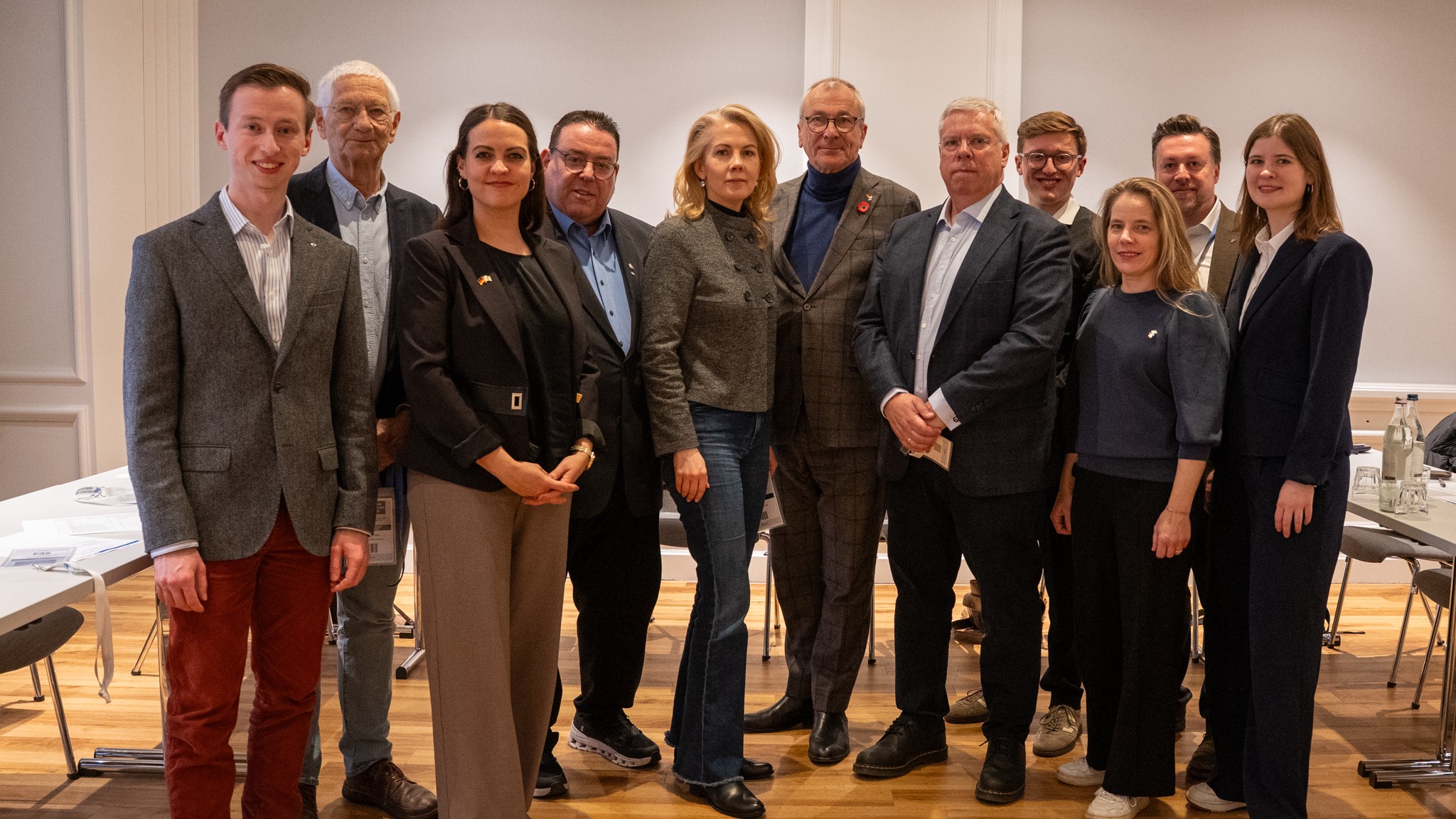
The German-Israeli Society (DIG) elected its leadership at its general assembly in Nuremberg over the weekend. Volker Beck remains president. Eight of the board’s 14 members, however, are new. As a result, the makeup of the body has changed considerably. An overview.
When Volker Beck spoke with The Bilateral Briefing in October about the future of the German-Israeli Society (DIG), he set a clear direction: “The DIG must become younger and more female.” The association, he said, has a clear surplus of men of his generation and older. People with other sociodemographic characteristics, the 65-year-old said, should “take on responsibility, on the board as well as locally.”
A month later, the DIG general assembly in Nuremberg elected a new board. And at least on this body, Beck’s wish has largely come true. Three developments stand out: The board is more female and younger. It is also even more clearly shaped by the Social Democrats (SPD) and the Greens than before.
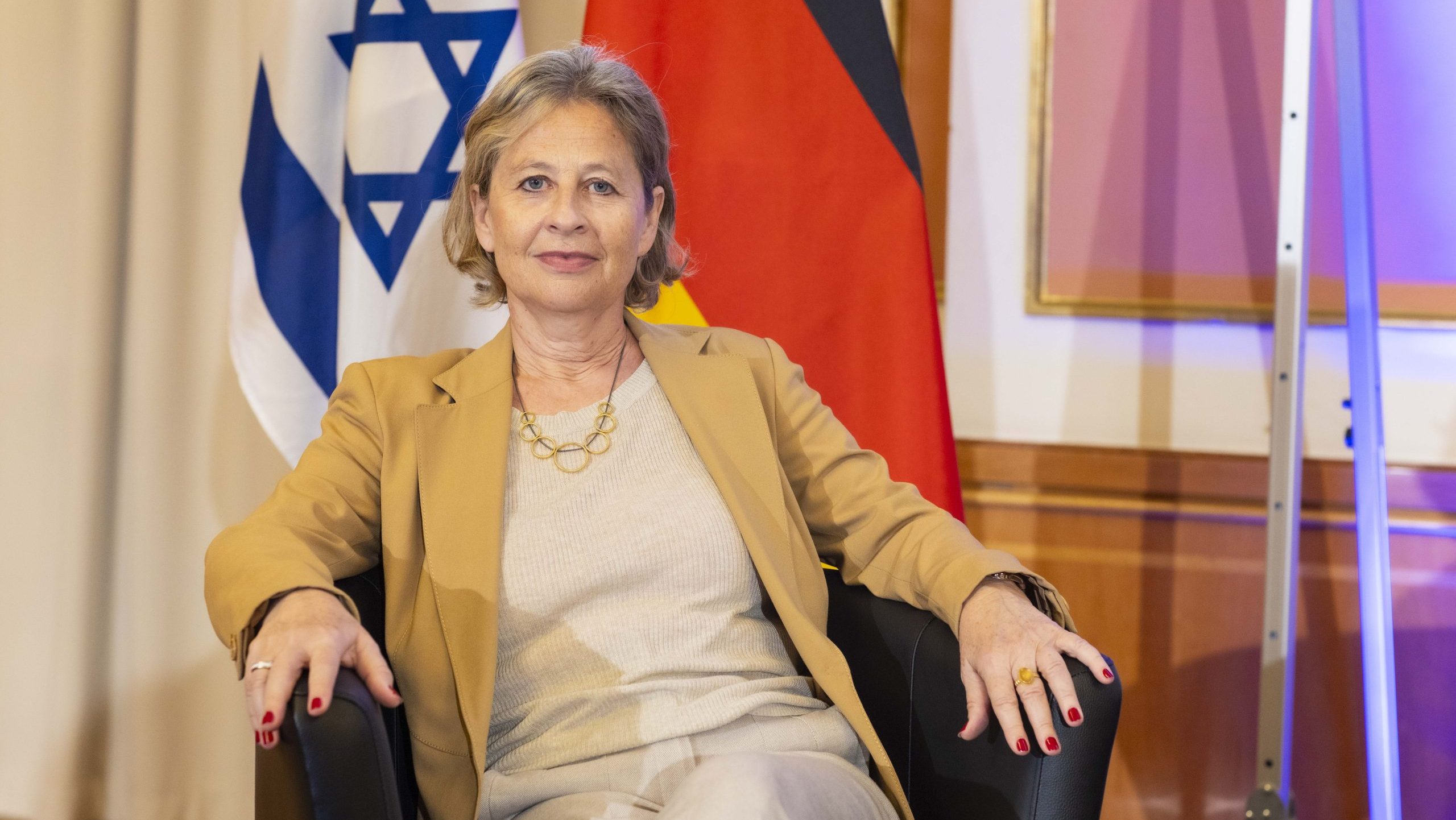
The previous board, elected in Bremen in 2024, included three women. Now there are five out of 14. The newcomers are former FDP general secretary Linda Teuteberg as vice president, as well as Hamburg Social Democrat Vanessa Mohnke, Anika Schmütz, chair of the DIG’s youth organization Junges Forum, and Bundestag staffer Catherine Stracke. Green politician Lisa Badum remains vice president, while Paula Ranft and Angelika Scherb are no longer on the board. That is not parity yet. But among the six further board members, there are now three women and three men.
The board has also become younger. Not all members’ ages are public, but based on what can be found out, the average age has likely dropped by several years. With Anika Schmütz, political scientist Max Schußmüller and Vice President Constantin Ganß, several board members are around 30.
The third development is a political one. Four board members belong to the SPD: Vice Presidents Markus Töns and Martin Hikel as well as Vanessa Mohnke and Catherine Stracke. In addition, Vice President Constantin Ganß has worked for SPD members of the Bundestag in the past. Previously, the board had two Social Democrats, Mathias Stein and Daniel Killy. The Greens hold five seats, one more than before: President Beck, Treasurer Hermann Kuhn, Vice President Badum, Yoram Ehrlich and Schmütz. The liberal FDP holds two seats with Teuteberg and Nicolai Makosch from Nuremberg, while the conservative CDU is represented only by one vice president, Jürgen Hardt. For two members, no party affiliation is known.
President: Volker Beck
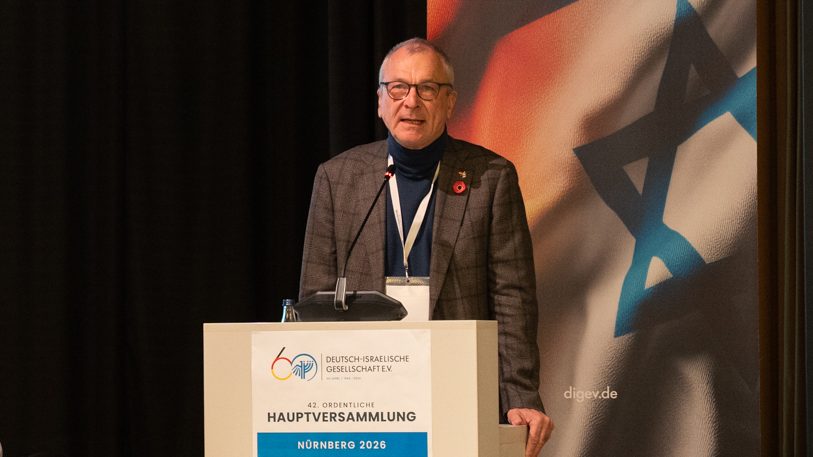
In October, Beck left open whether he would run again. “I would be glad if I find someone to whom I can pass the baton with a clear conscience,” he told The Bilateral Briefing. Apparently, there was no one willing to take on the time-consuming volunteer post. Beck ran again in Nuremberg and was confirmed in office with almost 96 percent of the vote.
Born in Stuttgart, Beck sat in the Bundestag for the Greens from 1994 to 2017, for many years as his parliamentary group’s chief whip. From 2014 to 2017 he chaired the German-Israeli Parliamentary Friendship Group, and in 2020 he co-founded the Tikvah Institute, which works, among other things, to combat antisemitism. Beck has been DIG president since June 2022. During that time, membership has grown from around 6,000 to more than 10,000.
Vice Presidents and Treasurer
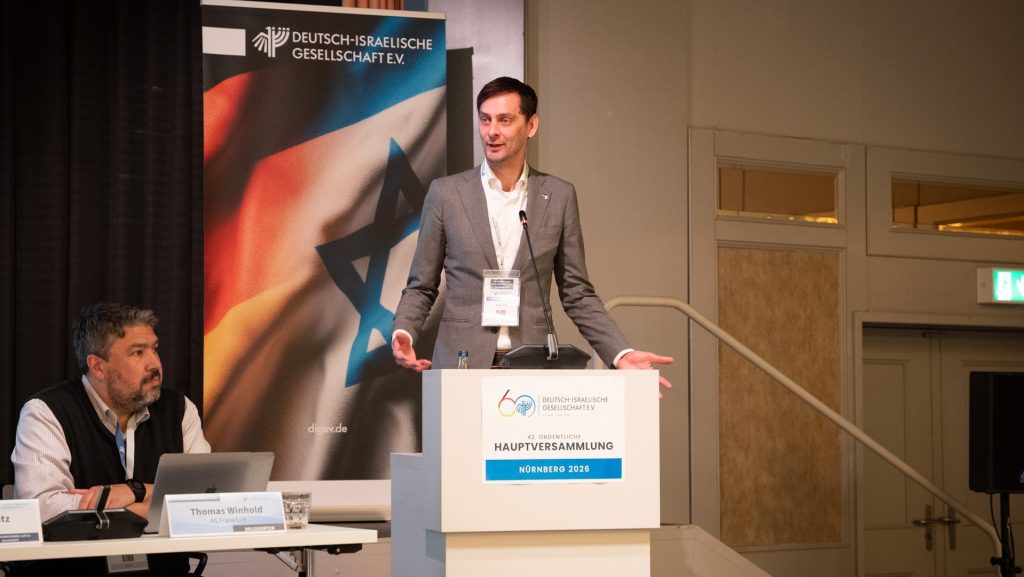
New among the vice presidents is Martin Hikel (40, SPD), mayor of the Berlin district of Neukölln. Not least because of his stand against hatred of Israel, the Berlin local politician has become known across Germany. When the Samidoun network handed out sweets in Neukölln on October 7, 2023, Hikel spoke of an “appalling glorification” of terror and called for a ban. Even before that, he had walked along Sonnenallee with Israel’s ambassador Ron Prosor. Because of its stance on Israel, he sees no basis for cooperation with the Left Party group in Neukölln. When its leader called the mayor of the partner city Bat Yam, who was visiting at Hikel’s invitation, a “perpetrator of genocide” in 2025, it made national headlines.
Markus Töns (62) has represented the SPD in the Bundestag since 2017, directly elected in Gelsenkirchen; before that he spent twelve years in the state parliament of North Rhine-Westphalia. Within his party, he is one of the clear voices on Israel’s side. He called the partial halt of German arms exports to Israel in the summer of 2025 “politically naive in many respects.” In September, he warned the SPD against a coalition with the Left Party, which he said had made antisemitic statements “in many places.”
Linda Teuteberg (45) sat in the Bundestag for the FDP from 2017 to 2025 and was her party’s general secretary in 2019 and 2020. Since May, she has been deputy federal chair of the FDP, and in October the Brandenburg state parliament elected her the state’s commissioner for coming to terms with the East German dictatorship. On the third anniversary of October 7, Teuteberg declared that the FDP stands “without ifs or buts” behind Israel’s right to exist. Any antisemitism, she said, is “equally unacceptable,” whether from the right, the left or Islamists.
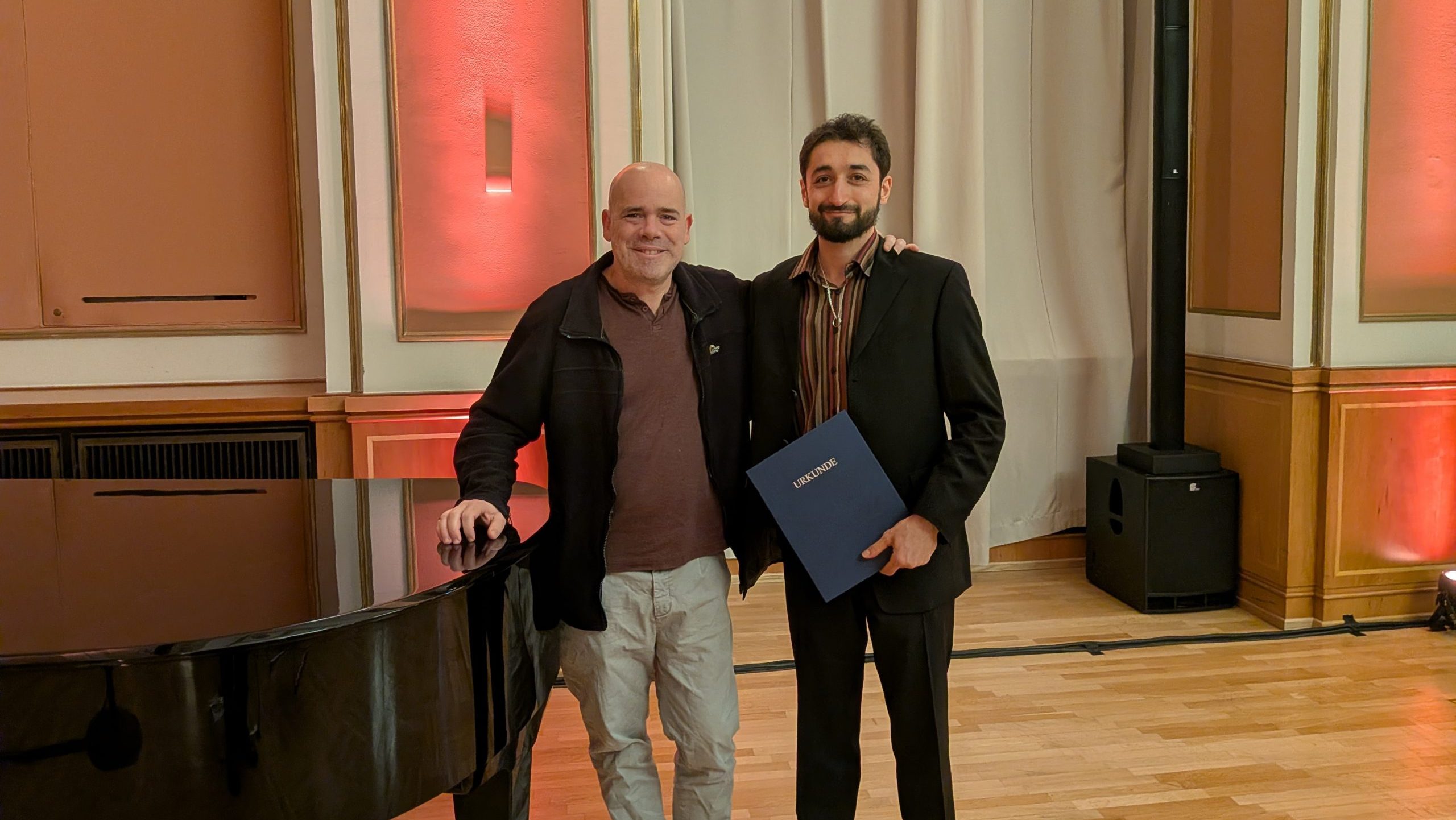
Lisa Badum (43) has been DIG vice president since 2022. The Green lawmaker from Bamberg has sat in the Bundestag since 2017. In 2023, in a guest article in the Jüdische Allgemeine, she criticized an interview that journalist Tilo Jung had conducted for his show “Jung & Naiv” with Middle East expert Muriel Asseburg of the German Institute for International and Security Affairs (SWP). The two discussed the Middle East conflict as if it were taking place “in a vacuum,” Badum wrote: Israel’s fight for its existence and the perspective of terror victims were missing. Instead, they judged “from a comfortable distance” what kind of defense Israel should be allowed.
Jürgen Hardt (63), vice president since 2022, has been a CDU member of the Bundestag since 2009 and is the foreign policy spokesman of the CDU/CSU parliamentary group. He has defended German arms deliveries to Israel and last year rejected EU economic sanctions as well as recognition of a Palestinian state. He did, however, support targeted sanctions against radical settlers.
The youngest vice president is Constantin Ganß. He is 27 and has held the office since 2024. After finishing school, he did voluntary service in Israel with Action Reconciliation Service for Peace, including at Yad Vashem. In 2021 he became chair of the DIG’s Bamberg branch and later led the Junges Forum. Ganß has worked for SPD members of the Bundestag and today works for the American Jewish Committee in Berlin.
Hermann Kuhn (81) remains treasurer. The Green politician from Bremen was for many years vice president of the Bremen state parliament and has headed the DIG’s Bremen/Lower Weser branch since 1995. He already managed the association’s finances from 2015 to 2024. In February, he took over the post again after his successor Hartmut Ebbing resigned.
Further Board Members
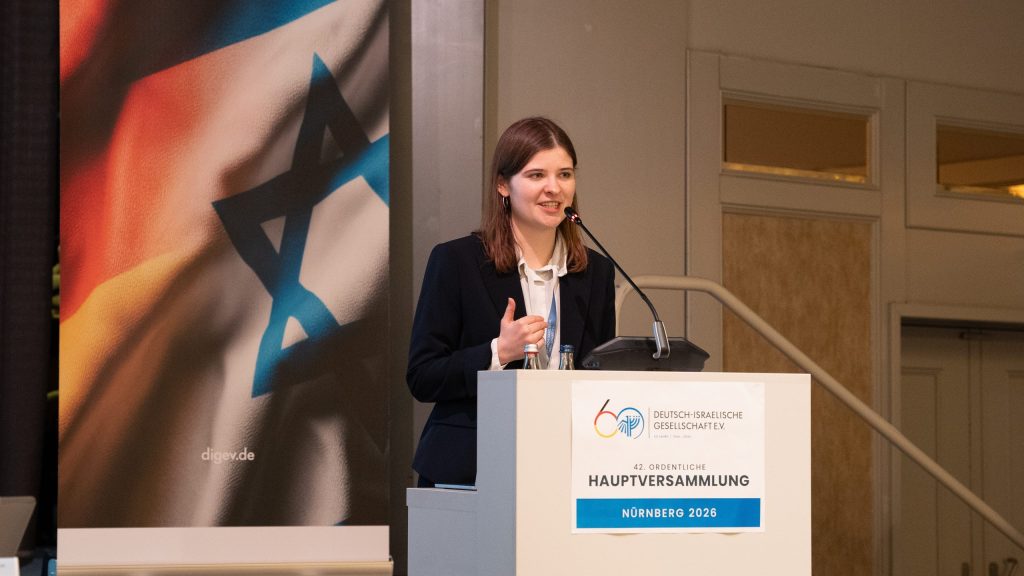
Anika Schmütz (29) has led the DIG’s Junges Forum since this year; the youth organization has around 1,700 members in more than 50 cities. The Green politician from Darmstadt works as an adviser in the Hesse state parliament and ran for the city council this year. Antisemitism today rarely appears openly, she says, but rather “in the guise of criticism of Israel.”
The only one remaining from the previous group of further board members is Yoram Ehrlich (62). Born in Israel in 1964, he has lived in Germany since 1989 and has been a DIG member since 1992. Ehrlich co-founded the DIG’s Saarland branch and runs a travel company that organizes delegation and cultural trips. He is a member of the Greens.
Nicolai Makosch chairs the DIG’s Nuremberg-Middle Franconia branch, the region where the general assembly took place. In 2024, he opened the first Israel Day in Fürth. Professionally, he works in product management at a Nuremberg IT training provider. Politically, he is active in the FDP, for which he ran in the district council election in Nürnberger Land.
Vanessa Mohnke (46) represented the SPD in the Hamburg state parliament from 2020 to 2025 and has been a member of her party’s state executive since 2018. Since 2021, she has been on the board of the DIG’s Hamburg branch. In parliament, she advocated rebuilding the Bornplatz Synagogue, which she said would be “a sign of a vibrant and visible Judaism” in the city.
Read more
Max Schußmüller (34) is a political scientist who works in policy consulting. He was previously a fellow at the student think tank EPIS, where he researched security policy in the Middle East and Iran. In 2023, together with Yaron Lischinsky, he published an analysis there on the Abraham Accords and the rapprochement between Saudi Arabia and Iran. Lischinsky, an employee of the Israeli embassy in Washington, was shot dead in an antisemitic attack in May 2025.
Catherine Stracke works in the Bundestag and describes herself as a “passionate Social Democrat.” She is deputy chair of the “Bernhard-Kreis,” an association of Bundestag staff committed to Jewish life in Germany and to the fight against antisemitism.
Younger, More Female—and a Successor in Reserve?
Whether the new board reflects the DIG’s membership is hard to say. Figures on the age, gender or party affiliation of its more than 10,000 members are not publicly available. Beck’s own diagnosis of a surplus of older men suggests, however, that the board is somewhat ahead of the membership base. At least at the top, the president’s goal has thus been met: The board has become younger and more female.
Beck did not get one wish fulfilled in Nuremberg, however: He continues to carry the baton himself. But among the newcomers to the board there are certainly candidates who could be entrusted with the job in the future—and in two years there will be another election.